QI XI · CULTURE & CRAFT
Explore Tibetan Craftsmanship & Devotional Traditions
Discover the devotional meaning behind Dzi beads, thangka painting, Tibetan incense and tsa tsa, then explore the pieces that speak to your intention.
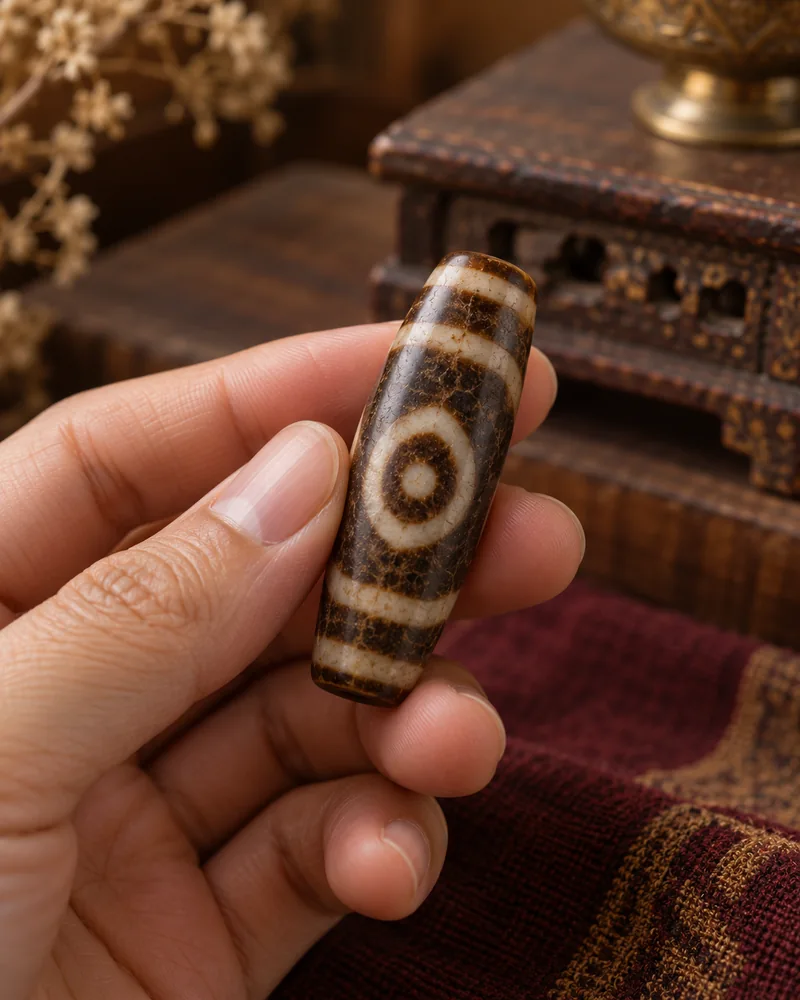
Dzi beads: deity, offering and wearing
Dzi, also written gzi, are treasured beads associated with Tibet and neighbouring cultures, commonly represented by patterned agate paired with turquoise or coral. They bring together adornment, collecting and protective devotion, and today also appear in international museum collections and art auctions. At Qi Xi, each Dzi bead is offered before its associated deity for 36 months, with chanting and blessings during pujas. In our tradition, these rites give the beads their devotional meaning and express a wish for protection. To choose one, start with a pattern you like, a deity you honour, or a wish you want to carry. Please get in touch if you would like to learn more about the offerings behind a particular bead. For everyday wear, do not step over sacred objects. Remove them before sleeping, showering or sexual intimacy, keep them somewhere clean and secure, and maintain a respectful attitude.
Thangka: Buddhist painting, proportion and transmission
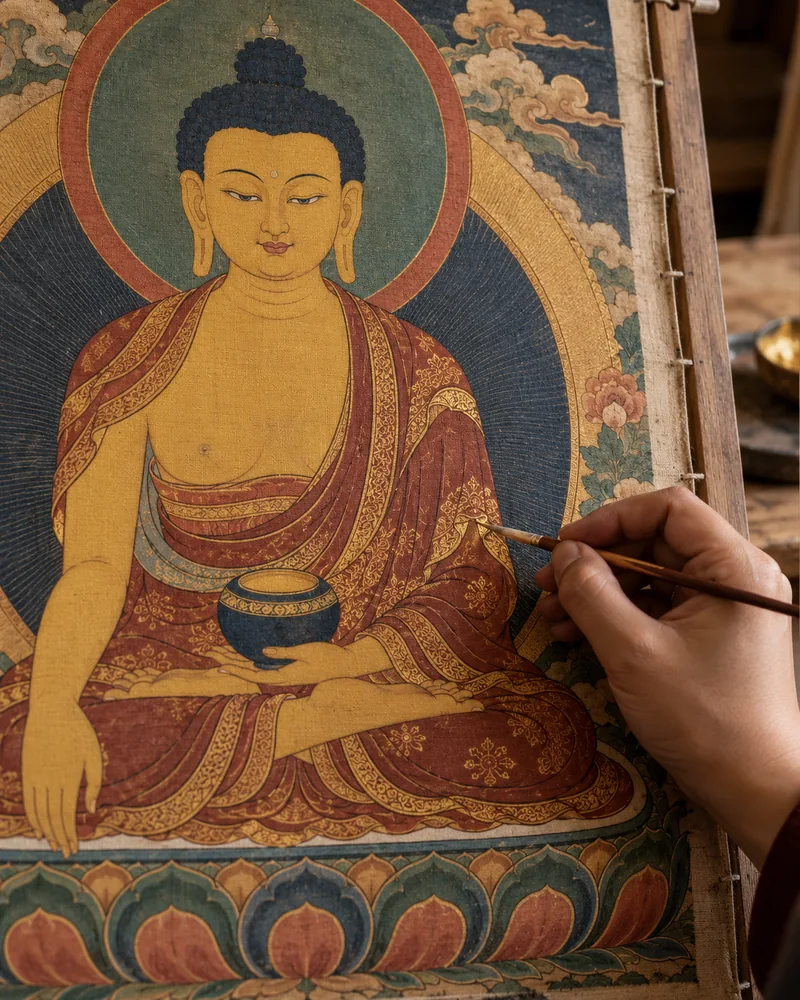
Thangkas developed in Tibet through Buddhist exchanges with India, Nepal and neighbouring regions, depicting buddhas, teachers, protectors and mandalas for devotion and contemplation. Today they are collected and studied by international museums and traded at art auctions. On 26 November 2014, Christie’s Hong Kong sold a Yongle-period imperial embroidered thangka for HK$348,440,000, setting its then record for Chinese art sold by an international auction house. Imperial history, rare textile workmanship and provenance contributed to that historical work’s importance. Qi Xi’s hand-painted thangkas are painted entirely by hand by Buddhist practitioners who follow traditional rules for sacred proportions. Each is blessed by a lama. Begin your selection with the figure’s proportions, face, eyes and expression, then explore robes, ornaments, attributes and surrounding details, considering the harmony of line and colour alongside your deity and intended setting. Sustained study and teaching keep this craft alive: Regong arts, including thangka, entered China’s national intangible heritage list in 2006 and UNESCO’s Representative List of the Intangible Cultural Heritage of Humanity in 2009. Place a hand-painted work somewhere clean and secure. Keep its surface away from water; do not wash it or use a wet cloth, and avoid damp, harsh sunlight and direct smoke or heat.
Tibetan incense: traditional making and offerings
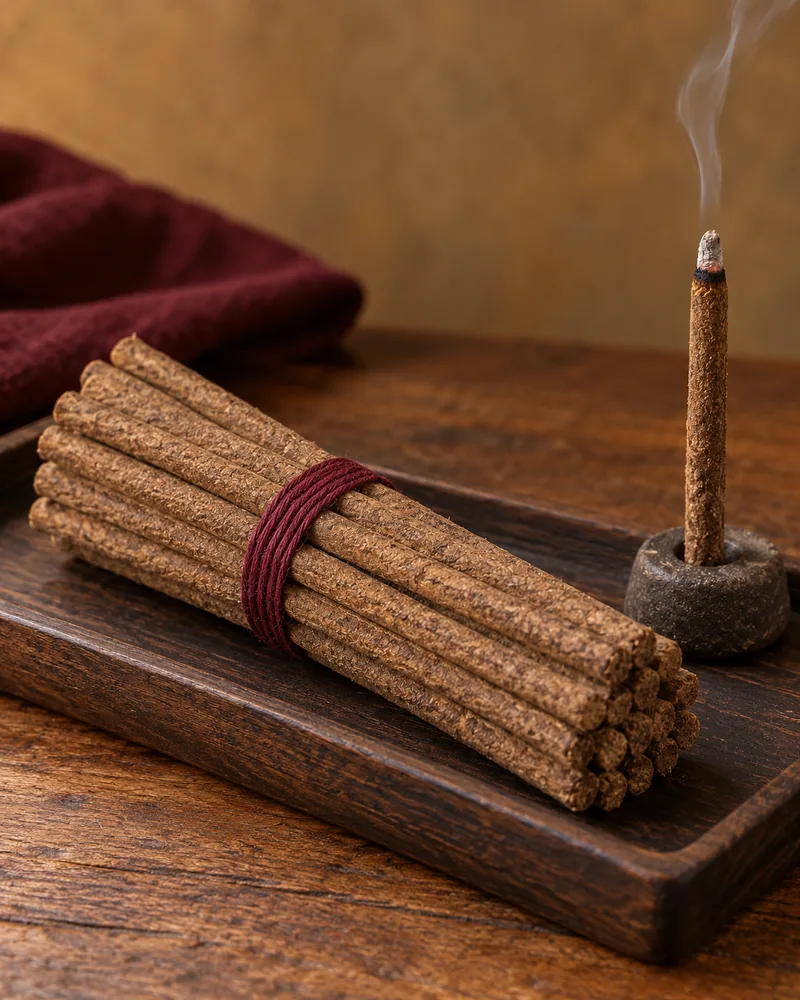
Tibetan incense connects monasteries and household shrines through offerings of fragrance, reverence and aspiration. Nyemo’s origin story reaches back to the seventh century, and its incense-making tradition entered China’s national intangible heritage list in 2008. Himalayan incense also reaches overseas customers: traditional Bhutanese makers, for example, have documented exports to the UK and US. Qi Xi values traditional making and aromatic plants, inviting you to make offering incense a deliberate pause in daily life. Regional recipes describe cypress, juniper, sandalwood and herbs, sometimes including saffron, spikenard or angelica; consult each product for its actual ingredients. Grinding, blending, kneading and drying bring those materials together as sticks, cones or powders suited to different holders and spaces. Use a modest amount during prayer, recitation or quiet reflection, with a stable, heat-resistant holder to collect ash. Provide ventilation, keep combustible items away and never leave burning incense unattended. Formal smoke offerings such as sang follow their own instructions. Reverence matters more than dense smoke, allowing fragrance and intention to meet.
Tsa tsa: Tibetan sacred images and personal devotion
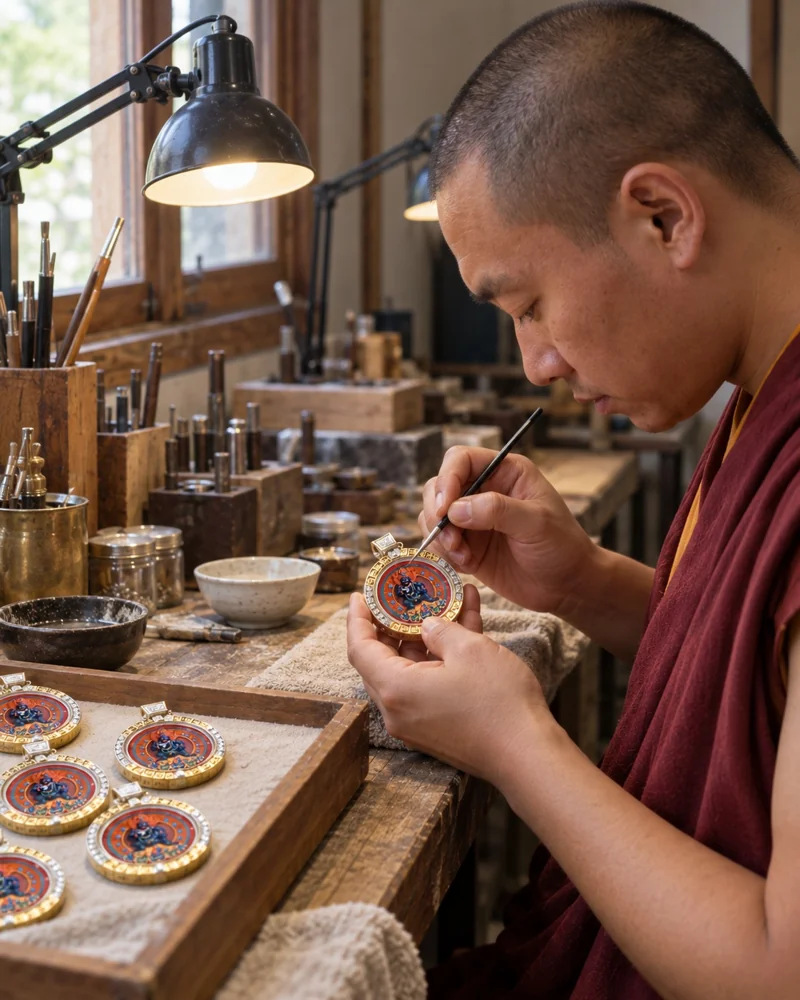
Tsa tsa are small moulded sacred images in Tibetan Buddhism, depicting deities, stupas or groups of figures in relief or three dimensions. Making and offering them can express devotion and merit-making. International museums study them as objects of religious art, pilgrimage and offering, and examples also appear at art auctions. Qi Xi tsa tsa are handmade by Buddhist practitioners with care for ritual making and devotional intention. Materials used include blessed pills, saffron, sacred earth, incense ash and relics, with the actual combination described for each piece. Forms such as Shakyamuni Buddha, Avalokiteshvara, Tara and protectors invite you to begin with the deity and your aspiration. A carried sacred image is sometimes called a “portable temple”, keeping remembrance and kindness close: tsa tsa are images, while a ga’u is a container that may hold images, prayers or other sacred contents. A Qi Xi specialist can help you choose a shrine or wearable form. Keep sacred objects clean and secure, avoid impacts and do not step over them. Remove wearable pieces before sleeping, showering or sexual intimacy, and approach them with respect.